Cells at War: A Game-based Approach to Learning Biochemistry
Reece Sophocleous¹, Danielle Warren¹, Jean-Paul Amore², Rosa Da Silva³ and Tracey Kuit¹
¹University of Wollongong
²George Brown College, Toronto, Ontario, Canada
³McMaster University, Hamilton, Ontario, Canada
Game-based learning is an established educational approach (1), but incorporating games into contemporary biochemistry teaching presents new challenges. Effective educational games must balance engagement with meaningful learning outcomes. Australian STEM teaching has not yet fully realised the potential of game-based learning, potentially because of resource constraints and limited funding for research and development (2).
Undergraduate science educators face increasing student numbers and diversity, multiple modes of course delivery and rapidly evolving educational technologies, including generative artificial intelligence (GenAI). Financial pressures further complicate the delivery of effective learning experiences across face-to-face, online and blended environments.
Game-based learning offers opportunities to address some of these challenges by motivating students, preparing them to respond to uncertainty (3), and providing flexible learning pathways. Incremental achievements can accommodate differences in students' backgrounds, experience and learning preferences (4).
The international collaborative project 'Cells at War: Cells vs. Type 1 Diabetes' was developed to explore these opportunities in undergraduate biochemistry and molecular biology education. The project aims to complement conventional teaching, develop students' employability skills and investigate student perceptions of educational gaming.
Development of the game incorporated the PEAR (Pedagogy, Experience, Assessment, Reflection) model alongside a work-integrated learning (WIL) framework. A students-as-partners approach connected educational theory with practical professional development while providing opportunities to explore biochemical interactions associated with Type 1 diabetes.
University and college students contributed to the game's design and development, bringing expertise from biochemistry, molecular biology, science education, programming, art and digital design.
Focus groups involving these student partners highlighted the professional skills developed through participation. Students reported benefits in time management, communication and collaboration, although they also identified challenges relating to the clarity of their responsibilities and expected contributions.
Initially, some participants were uncertain about how to contribute effectively. Engagement improved when clearly defined activities were introduced, including compiling research and preparing summary cards. These experiences demonstrated the importance of effective project management, clear communication and academic guidance in student-partner initiatives.
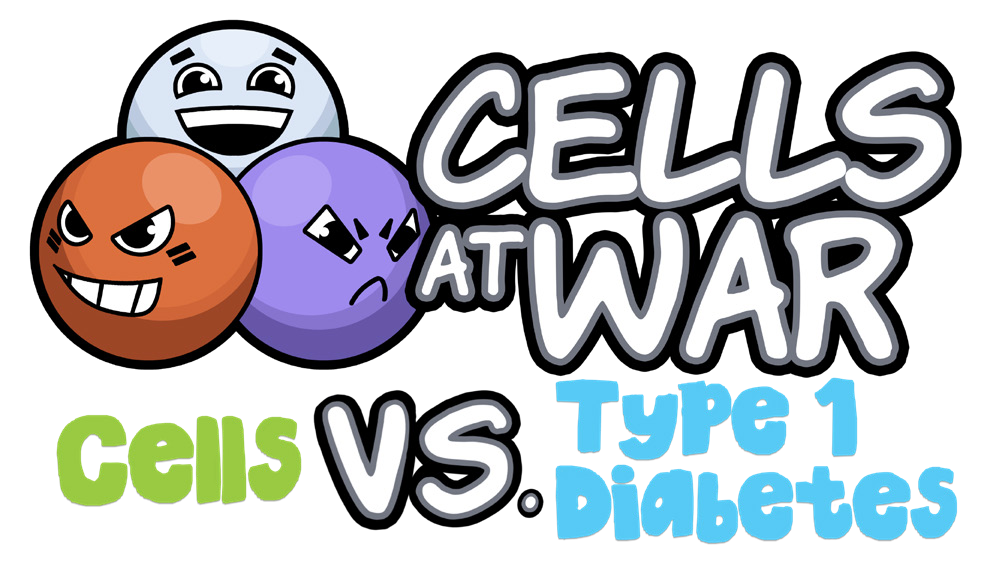
Cells at War: Cells vs. Type 1 Diabetes game artwork.
During its alpha development phase, Cells at War was trialled with first-year biology students at the University of Wollongong. The evaluation examined students' learning habits, engagement with coursework and attitudes towards game-based learning, including their experiences of the new game.
Feedback was collected from 45 students. Approximately half identified as non-gamers, emphasising the need for educational games to appeal to students with different levels of gaming experience.
Students generally responded positively to the concept of game-based learning. They recognised its potential to connect course material with previous experiences and to strengthen their understanding of scientific concepts.
However, the evaluation did not identify a relationship between students' existing gaming habits and increased motivation to engage with coursework through game-based learning. This finding suggests that educational game design must consider more than students' familiarity with recreational gaming.
Responses from both the student development partners and the initial playtesting group provided useful insights into attitudes towards game-based learning in biochemistry and molecular biology.
The findings emphasised the importance of thoughtful game design and integration with the curriculum. Educational games need to accommodate diverse student needs while maintaining a clear connection to learning objectives.
Further research and development will explore how game-based learning can be implemented sustainably within STEMM curricula. The project team also intends to continue investigating the students-as-partners model as an approach to designing, developing and implementing educational games.
Funding acknowledgement: This project received partial funding from CEWIL Canada's iHUB, supporting work-integrated learning opportunities for the Canadian students participating in the project.
References
- Prensky M. Digital Game-Based Learning. 2001. McGraw-Hill, USA.
- Van Eck R. Educause Rev 2015;50:12–28.
- Jääskä E, Lehtinen J, Kujala J, Kauppila O. Proj Leadersh Soc 2022;3:100055.
- Ding D, Guan C, Yu Y. Int J Inf Educ Technol 2017;7:148–152.
About the authors

Dr Reece Sophocleous is a Lecturer and Scholarly Teaching Fellow in the School of Chemistry and Molecular Bioscience at the University of Wollongong.
reeces@uow.edu.au
Dr Tracey Kuit is an Education-Focused Professor in the School of Chemistry and Molecular Bioscience at the University of Wollongong.
tracey_kuit@uow.edu.au

Danielle Warren is a PhD candidate and Teaching Assistant in the School of Chemistry and Molecular Bioscience at the University of Wollongong.
warrend@uow.edu.au

Dr Rosa da Silva is an Associate Professor in the Department of Biology, and Associate Dean, Undergraduate Studies, in the Faculty of Science at McMaster University, Canada.
rosa.dasilva@mcmaster.ca

Jean-Paul Amore is the Program Coordinator, Design, in the Centre for Arts, Design & Information Technology at George Brown College, Canada.
jamore@georgebrown.ca
This article first appeared in the ASBMB Education Feature of Australian Biochemist Vol 55 No 1, April 2024, pages 20–21.
ASBMB Membership Office
T +61 (03) 9907 8648
E asbmb@wsm.com.au
© 2026 ASBMB. All rights reserved.