Designing Learning Opportunities to Enrich Student Understanding Through Community and Professional Engagement
Lois Balmer
School of Medical and Health Science, Edith Cowan University, Western Australia
Background
The undergraduate Medical Science degree at Edith Cowan University (ECU) attracts students from a diverse range of backgrounds. Developing an engaging curriculum for these students requires learning experiences that connect theoretical scientific knowledge with its practical applications.
One challenge in teaching medical genetics is helping students recognise the relationship between concepts presented in textbooks and the experiences of individuals and families living with genetic conditions.
Understanding medical genetics involves more than learning the underlying science. Students must also appreciate the personal, social and ethical considerations associated with genetic disease (1).
As both a medical genetics researcher and an undergraduate educator, I recognised the importance of helping students develop this broader understanding.
Over several years, I worked to extend students' learning beyond the conventional cycle of lectures, laboratory classes and tutorials.
Although these teaching activities remain essential, medical genetics education should also emphasise the ultimate purpose of biomedical research: improving the lives of patients and their communities (2).
Drawing on my research experience and professional relationships with healthcare organisations, community groups and individuals affected by genetic disease, I redesigned the curriculum to provide more meaningful and authentic learning opportunities.
Through direct engagement with patients, families, carers and support organisations, students could explore the human experience of genetic disease and develop a more holistic understanding of the scientific concepts they were studying.
This approach aimed to improve students' engagement, deepen their understanding and encourage empathy towards individuals living with genetic conditions.
Developing Curriculum: Connecting with Community-led Approaches to Learning and Teaching
My approach to curriculum development has been guided by professional connections with community organisations and a commitment to creating learning experiences that actively involve students.
Before taking responsibility for the third-year Medical Genetics unit in 2014, student satisfaction was approximately 50%, according to institutional student evaluations.
The unit was delivered through a traditional structure of weekly lectures, with assessment consisting of an essay about a genetic disease, a mid-semester test and a final examination.
In 2015, I began transforming the unit using a human-centred, authentic learning approach designed to encourage students to engage more actively with the subject and reflect on their learning (3).
Professional and industry connections were used to introduce guest speakers into the weekly teaching program.
A major addition was the establishment of a Genetics Forum, where students could interact directly with individuals who had personal experience of genetic disease.
Forum participants included patients, family members and care workers, each offering perspectives that could not be gained through textbooks or conventional lectures alone.
Hearing these experiences encouraged students to consider how genetic conditions affect everyday life and the challenges faced by individuals and their families.
Importantly, the forum encouraged students to move beyond sympathy towards empathy and a willingness to take meaningful action.
Students began considering how their scientific knowledge could be applied to support patients' goals, improve health outcomes and contribute positively to the community.
The traditional essay assessment was replaced with a research and reflection cycle centred on the Genetics Forum (4).
Before attending the forum, students researched genetic diseases and prepared questions for the invited participants.
They were required to ensure their questions were ethically appropriate and culturally sensitive, encouraging them to consider how they communicated with people affected by genetic conditions.
Following the forum, students submitted a reflective assessment incorporating the responses they had received from participants.
This assessment structure encouraged students to connect scientific knowledge with real-world experiences, evaluate their assumptions and reflect on the professional responsibilities associated with healthcare.
The redesigned curriculum also provided opportunities for students to develop communication skills, ethical awareness and a deeper appreciation of patient-centred practice.
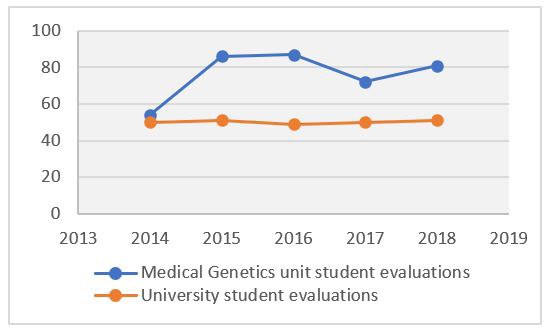
Fig. 1. Unit satisfaction, 2014–2019.
Evidence of Transformative Student Learning
Student reflections and evaluations demonstrated that the redesigned learning activities had a substantial impact on their understanding of medical genetics and their attitudes towards individuals living with genetic disease.
Four recurring themes emerged from the student feedback: connecting theory with practice, imagining future careers in healthcare, developing empathy and challenging perceptions of disability, and experiencing changes in personal perspectives.
Table 1 summarises these themes using paraphrased examples drawn from student evaluations, reflections and correspondence.
Table 1. Evidence of transformative learning experienced by students.
| Theme | Students' Perspectives |
|---|---|
| Connecting theory to practice |
Students described how guest speakers helped them connect textbook learning with real experiences. They recognised that genetic conditions affect people whose lives and challenges extend well beyond the examples discussed in academic materials.
Student evaluations, 2016 and 2018. |
| Envisaging future work in the health sector |
Students reported that the unit inspired them to consider careers in medical genetics and healthcare. They also recognised that successful patient care requires more than scientific expertise; developing relationships, understanding individual circumstances and communicating empathetically are essential.
The experiences of carers, parents and young people helped students appreciate the individuals behind a medical diagnosis. Student reflections, 2017 and 2019. |
| Developing empathy and challenging perspectives of disability |
Students reflected on the importance of treating individuals with disabilities respectfully and recognising their individuality.
Hearing directly from patients and carers challenged assumptions and encouraged a deeper appreciation of the responsibilities and experiences of those providing care. Student communication, 2019; student reflection, 2017. |
| Inspiring and transforming mindsets |
Students described the Genetics Forum as an inspiring experience that would influence their attitudes beyond university.
Some reported that their initial assumptions about life with chronic disease had changed substantially after hearing participants describe their resilience, determination and fulfilling lives. Student correspondence, 2018; student reflection, 2019. |
Student satisfaction improved markedly following the introduction of the redesigned curriculum.
As shown in Figure 1, satisfaction with the Medical Genetics unit increased substantially after the changes introduced in 2015 and remained consistently above the university-wide average.
Overall student satisfaction with the unit was reported to be 22 to 38 percentage points higher than the ECU average.
This result was particularly encouraging given ECU's strong performance in national student satisfaction surveys, including its recognition as the highest-rated public university for overall student satisfaction in Australia at the time (5).
The student reflections also demonstrated evidence of transformative learning (6).
Students were able to connect scientific theory with practical experiences, imagine future employment in the healthcare sector and develop greater empathy and respect for individuals living with disabilities.
Their reflections suggested that the forum challenged previously held assumptions and encouraged them to reconsider their understanding of genetic disease.
Rather than viewing genetic conditions solely through a biomedical framework, students increasingly recognised the importance of personal experiences, family relationships, community support and individual goals.
These outcomes demonstrate the value of community engagement in supporting both academic learning and the development of professional attitudes.
Conclusion
Bringing community-based initiatives into medical genetics education has been an extremely rewarding experience.
Providing students with authentic opportunities to engage with patients, families and care workers creates a human-centred learning environment that complements traditional scientific teaching.
The positive outcomes of the curriculum transformation are evident in improved student satisfaction, stronger academic performance and reflections demonstrating meaningful changes in students' understanding.
For some students, the experience has already helped shape their career aspirations and strengthened their commitment to continued learning.
I believe these experiences will have lasting benefits beyond the university, as students carry their developing empathy, professional awareness and scientific knowledge into their future careers and communities.
References
- Carter J (2006). Why It's Important for Students to Have Real-world Experience. Career Practitioners, Careers New Zealand.
- Mattick J, Dziadek M, Terrill B, Kaplan W, Spigelman A, Bowling F, Dinger M (2014). Med J Aust 201(1):17–20.
- Darcy Associates (2009). Best Practice Clinical Learning Environments within Health Services for Undergraduate and Early-Graduate Learners Final Report.
- Eaton M (2013). Progressive Scaffolding and Evaluation. Instructional Strategies to Transform Learning. Avila University.
- QILT (2019). 2018 Student Experience Survey National Report.
- Mezirow J (2000). Learning as Transformation: Critical Perspectives on a Theory in Progress. The Jossey-Bass Higher and Adult Education Series. Jossey-Bass Publishers, USA.
About the Author
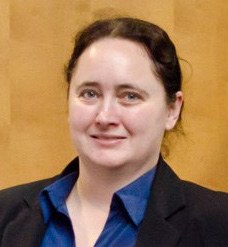
Dr Lois Balmer is a Senior Lecturer in the School of Medical and Health Science at Edith Cowan University.
l.balmer@ecu.edu.au
This article first appeared in the ASBMB Education Feature of Australian Biochemist Vol 52 No 2, August 2021, pages 18–19.
ASBMB Membership Office
T +61 (03) 9907 8648
E asbmb@wsm.com.au
© 2026 ASBMB. All rights reserved.