Educator and Student Reflections on Supervising and Conducting Biochemistry Education-based Research
Jordan Witchard and James Tsatsaronis
Department of Biochemistry and Chemistry, La Trobe University
Universities in Australia and internationally increasingly appoint education-focussed (EF) academics whose responsibilities include undertaking education research. Unlike traditional disciplinary research, however, education research is less commonly undertaken through undergraduate Honours or postgraduate student projects.
There is also relatively little published discussion of the experiences of EF academics supervising student researchers or of students undertaking these projects. In this article, an education-focussed academic and an undergraduate Science Honours student reflect on their shared experience of a biochemistry education research project.
Their reflections address three questions: why they chose to undertake the project, the challenges they encountered and the advice they would offer others considering education research.
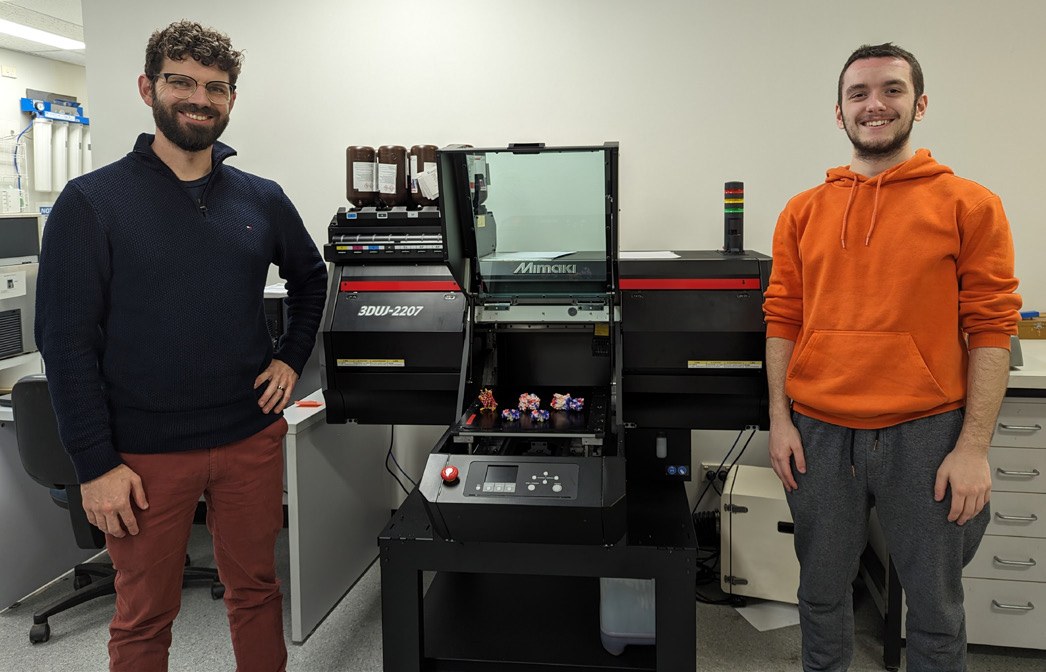
Fig. 1. James (left) and Jordan stand next to a 3D printer used in the education-based research project.
What motivated you to undertake/supervise an education project?
Jordan – Having studied biochemistry and genetics, I initially regarded education research as an unexpected direction. My own experience as a high school student, when I struggled academically and lacked motivation, changed after an inspiring biology teacher sparked my interest in the subject.
Working as a demonstrator in first-year biology reinforced that interest. Seeing students develop an understanding of difficult concepts highlighted the value of effective teaching and motivated me to explore education research.
James – As an education-focussed academic, research offers opportunities to investigate student learning beyond numerical measures such as grades. Although my background is in quantitative molecular science, I have become increasingly interested in understanding why particular teaching approaches succeed or fail.
Supervising Jordan also brings an additional responsibility: the research must contribute not only to my own academic work but also to the success of his Honours project.
What challenges have you faced?
Jordan – Moving from an analytical scientific background into education research presented a significant learning challenge. Initially, I was uncomfortable with qualitative research literature and tended to concentrate on familiar quantitative measures, including sample sizes and effect sizes.
Over time, I have become more comfortable with qualitative evidence and have begun developing the different research skills needed in science education.
James – Supervising an education Honours project has been rewarding but demanding. Preparing the project advertisement, ethics application and other documentation while managing teaching commitments requires careful coordination.
An equally important challenge was developing a meaningful research question. Reviewing the literature and establishing a suitable conceptual framework took considerably longer than anticipated, but proved an enjoyable part of the process.
What advice would you give to an EF academic or potential student considering an education project?
Jordan – Students moving from molecular science into science education should seek opportunities to teach, even in a limited capacity, to gain relevant experience. Reading widely beyond their own discipline can also help them become familiar with different research methods and perspectives.
Building a supportive relationship with a supervisor is particularly valuable. James's guidance helped me adjust to an unfamiliar research field.
James – Education-focussed academics and prospective students should begin planning early, especially when identifying an appropriate research question. Broad engagement with the literature and discussions with researchers from other disciplines can strengthen a project.
Collaboration and constructive feedback from colleagues can also be valuable. Finally, it is important to establish realistic objectives for a student project while recognising opportunities for future research that may emerge.
About the authors
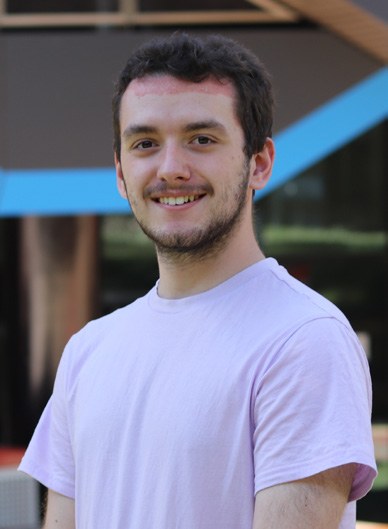
Jordan Witchard is an Honours student in the Department of Biochemistry and Chemistry, La Trobe University.
21017803@students.latrobe.edu.au
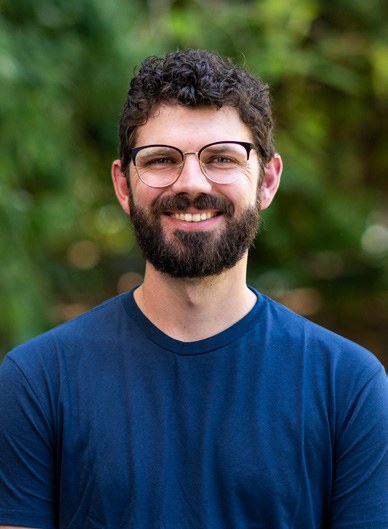
Dr James Tsatsaronis is a Senior Lecturer in the Department of Biochemistry and Chemistry, La Trobe University.
j.tsatsaronis@latrobe.edu.au
This article first appeared in the ASBMB Education Feature of Australian Biochemist Vol 55 No 2, August 2024, pages 17–18.
ASBMB Membership Office
T +61 (03) 9907 8648
E asbmb@wsm.com.au
© 2026 ASBMB. All rights reserved.