Planting the Seeds of Learning in the Future Biochemist
Melissa Pitman
School of Biological Sciences, University of Adelaide
One of the key objectives of the Australian Society for Biochemistry and Molecular Biology (ASBMB) is to support education and training in biochemistry and molecular biology.
Inspiring students while they are still at high school could play an important role in encouraging more young people to pursue bioscience studies at university.
However, identifying the most effective ways to engage students with biochemistry and molecular biology requires collaboration between secondary school teachers, university educators and practising scientists.
To explore opportunities for strengthening this engagement, I contacted the South Australian Science Teachers Association (SASTA), the Biology Teachers of South Australia (BTSA) group and bioscience educators from South Australia's three universities:
- University of Adelaide
- Flinders University
- University of South Australia
These discussions provided insights into how high school students might be encouraged to develop an interest in bioscience and how universities and professional organisations could support their learning.
Supporting High School Science Teachers
The South Australian Science Teachers Association plays an important role in supporting science education throughout the state.
SASTA provides teaching resources and professional development opportunities and supports science teachers through conferences, scholarships and awards.
The organisation also coordinates the annual Oliphant Science Awards , which encourage students to engage with scientific investigation and discovery.
In 2021, SASTA celebrated its 70th anniversary and had a membership of more than 500.
Professional organisations such as SASTA provide valuable networks through which universities and scientific societies can connect with school educators and identify opportunities to enrich science teaching.
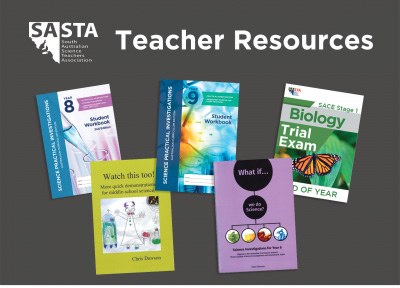
SASTA supports science teachers in South Australia through conferences, scholarships, awards and teaching resources. It also runs the annual Oliphant Science Awards. In 2021, SASTA celebrated 70 years and had more than 500 members.
Connecting Students with Real-world Science
Discussions with high school educators suggested that students would benefit from greater exposure to professional scientific environments.
Opportunities to visit research laboratories, meet practising scientists and experience scientific techniques could help students understand how the concepts they learn at school are applied in real research.
Access to scientists could also assist students with school assessment tasks that require them to investigate scientific careers, research methods or contemporary developments in bioscience.
One possible approach would be to draw on the extensive network of ASBMB members to identify scientists willing to volunteer their time.
These volunteers could deliver presentations at schools, discuss their research or participate in interviews with students.
Such interactions could introduce students to a wider range of bioscience careers while making scientific research more accessible and relevant.
Increasing Access to Laboratory Experiences
Although visits to research laboratories could provide valuable experiences, accommodating large numbers of high school students presents practical challenges.
Research laboratories are generally designed for small groups of scientists, and the number of interested students is likely to exceed the available capacity.
Some laboratories may be able to provide internships or work experience placements for individual students or small groups.
However, a more scalable approach for larger cohorts could involve using university undergraduate teaching laboratories.
These facilities are specifically designed to accommodate larger groups and could provide structured practical activities introducing students to molecular biology techniques.
Some universities already offer STEM engagement programs for secondary school students, including activities related to bioscience.
Providing more opportunities for hands-on laboratory work within these programs could further strengthen student engagement.
Direct experience with laboratory equipment, experimental methods and scientific problem-solving could help students develop confidence and a stronger appreciation of the practical nature of biochemistry and molecular biology.
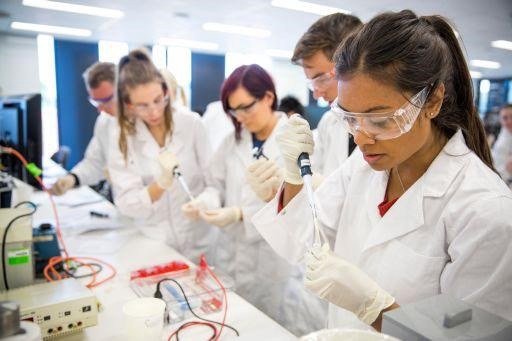
Undergraduate students learning molecular biology techniques. Image: adelaide.edu.au.
Professional Development for High School Teachers
Another important opportunity involves providing professional development for secondary school science teachers.
Teachers play a central role in developing students' interest in science, but delivering practical molecular biology activities requires specialised knowledge, technical skills and suitable equipment.
Professional development programs could help teachers gain confidence in conducting laboratory experiments and introducing more advanced techniques into their classrooms.
Some universities already offer training workshops developed collaboratively by high school and university educators.
These workshops provide teachers with practical experience in conducting molecular biology experiments and could serve as models for similar programs at other institutions.
However, an important consideration is whether schools have the necessary laboratory equipment to implement the techniques introduced during professional development.
Even when teachers have appropriate training, limited access to equipment may prevent them from incorporating more advanced experiments into their teaching.
For this reason, a combination of teacher training, school-based activities and access to university laboratory facilities may be required.
Building Stronger Connections Between Schools and Universities
Keeping up to date with scientific knowledge and experimental methods requires ongoing training, support and, importantly, time.
Initiatives that strengthen teachers' scientific knowledge and confidence can ultimately improve the learning experiences available to their students.
Universities, scientific societies and individual researchers can contribute by building stronger partnerships with secondary schools and providing opportunities for students and teachers to engage with contemporary bioscience.
These partnerships could take a variety of forms, including school presentations, scientist interviews, laboratory experiences and teacher professional development.
By combining these approaches, it may be possible to create more accessible pathways for students to discover biochemistry and molecular biology and consider future careers in these fields.
Through the connections established with South Australian teachers and university educators, I hope to continue advocating for opportunities that support teachers and students in their bioscience education.
Encouraging curiosity and providing meaningful experiences during high school may help inspire the next generation of biochemists and molecular biologists.
About the Author
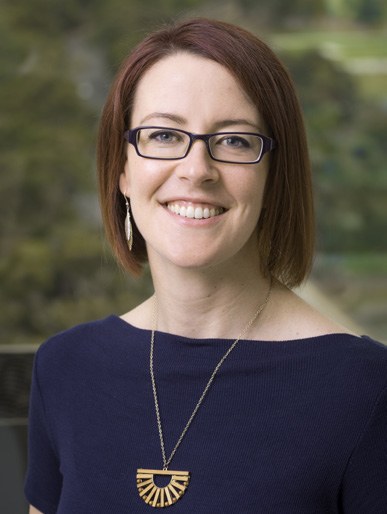
Dr Melissa Pitman is a Senior Lecturer and researcher in the School of Biological Sciences at the University of Adelaide. Her research spans drug discovery and cancer biology.
melissa.pitman@adelaide.edu.au
This article first appeared in the ASBMB Education Feature of Australian Biochemist Vol 52 No 2, August 2021, page 20.
ASBMB Membership Office
T +61 (03) 9907 8648
E asbmb@wsm.com.au
© 2026 ASBMB. All rights reserved.