Refreshing a Biochemistry Curriculum: A Pinch of Problem-Based Learning, a Dash of Peer-Mentoring, Blended Together with Online Interactive Modules
James Tsatsaronis, Katrina Binger, Julian Pakay, Lakshmi Wijeyewickrema, Fiona Durand, Fiona Carroll and Noni Frankenberg
La Trobe University
Changes in Australian higher education, particularly the increasing use of online and blended teaching, have influenced how biochemistry curricula are designed and delivered. In 2019, student feedback prompted us to undertake a comprehensive redesign of our second-year biochemistry curriculum at La Trobe University.
Our primary objectives were to strengthen the sequencing and scaffolding of subject content, improve the integration of online and face-to-face learning, and ultimately enhance the student learning experience and educational outcomes.
At La Trobe University in Victoria, second-year biochemistry is delivered through two subjects: BCH2IBM (Introductory Biochemistry) and BCH2MBC (Metabolic Biochemistry).
Both subjects are taught across three Australian campuses, online through Open Universities Australia (OUA), and internationally through La Trobe University's partnership with PSB Academy in Singapore.
These subjects are compulsory components of more than ten university courses, including Biomedicine, Animal and Veterinary Biosciences, Agriculture and Human Nutrition. Consequently, the curriculum must support students entering with a diverse range of disciplinary backgrounds and learning needs.
Redevelopment through thematic analysis
To better understand student concerns, we examined qualitative feedback collected through subject surveys from previous years. Using NVivo software, we conducted a thematic analysis to identify recurring issues and opportunities for improvement.
Four major themes emerged from the feedback: class format, delivery mode, assessment and content quality.
These findings were considered alongside the biochemistry threshold concepts developed by the American Society for Biochemistry and Molecular Biology (ASBMB, USA) (1). Together, they informed the framework for redesigning BCH2IBM and BCH2MBC.
As illustrated in Figure 1, the revised curriculum was structured to create a more coherent progression of learning across lectures, workshops and practical classes, while strengthening connections between the two subjects.
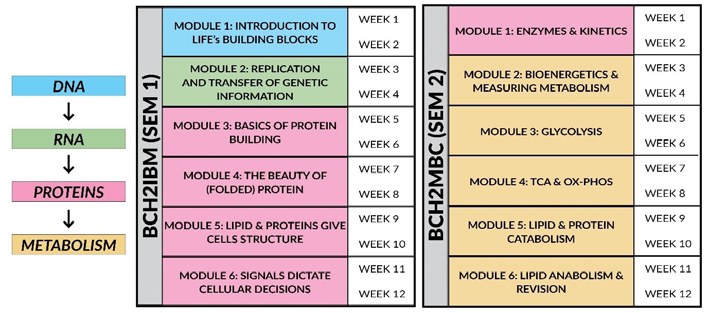
Fig. 1. A blended transformed biochemistry curriculum.
The new approach introduces biochemistry concepts progressively, allowing students to develop their understanding before applying more complex ideas. Lecture material is delivered online through short recordings of approximately 5–7 minutes, rather than relying exclusively on longer traditional lectures.
These short teaching segments break complex biochemical concepts into manageable components, helping reduce excessive cognitive demands while allowing students to revisit difficult material as needed.
The recordings are incorporated into Moodle Lesson modules alongside formative quiz questions and interactive activities developed using H5P.
This combination allows students to engage with the material actively, check their understanding and receive feedback as they progress through each topic.
Subject content is organised into six modules, each spanning two weeks. Across the two subjects, the modules develop students' understanding of the flow of genetic information through the central dogma, protein structure, enzyme kinetics, metabolism and cell biology.
In BCH2IBM, the curriculum begins with the building blocks of life and progresses through DNA replication, transfer of genetic information, protein synthesis and folding, the contribution of lipids and proteins to cellular structure, and cellular signalling.
BCH2MBC then builds on these foundations through enzymes and kinetics, bioenergetics, glycolysis, the tricarboxylic acid cycle and oxidative phosphorylation, lipid and protein catabolism, and lipid anabolism.
Each two-week module concludes with a problem-based learning (PBL) workshop in which students apply concepts introduced through the online materials to realistic scenarios drawn from biochemical research and industry.
Rather than delivering additional lectures, academic staff act as facilitators during these workshops. Students work in small groups, taking responsibility for investigating problems, discussing possible solutions and applying their knowledge.
The workshops are also supported by near-peer mentors: high-achieving students from previous cohorts who volunteer to assist current students during PBL activities.
These mentors provide additional support and share their experiences of learning challenging biochemistry concepts. Their involvement creates opportunities for informal discussion and helps foster a collaborative learning environment.
Student performance in PBL workshops is assessed through participation scoring. Both peers and academic staff evaluate individual contributions, including communication, engagement and participation in group problem-solving.
This approach is intended to develop skills extending beyond biochemical knowledge, particularly teamwork, communication, critical thinking and information processing.
Redevelopment yields improvement
Following the introduction of the redesigned curriculum in 2020, overall student satisfaction improved across both subjects.
Average satisfaction scores increased from approximately 3.5 to above 4 out of 5, indicating a positive response to the changes.
Qualitative student feedback also highlighted the online Lesson modules as particularly effective learning resources.
Notably, blended learning had previously been identified in student feedback as an area requiring improvement. Following the redevelopment, students increasingly described the blended approach as one of the strongest aspects of their subjects.
A separate survey examined student perceptions of the PBL workshops. More than 80% of respondents agreed that the workshops helped them apply concepts covered in lectures.
Additionally, more than 85% of respondents reported enjoying the opportunity to work collaboratively with their peers.
These findings suggest that integrating authentic problem-solving activities with structured online learning can improve student engagement and support the application of biochemical knowledge.
Although the contribution of near-peer mentors has not yet been formally evaluated, our observations suggest that their involvement may be beneficial, particularly for students experiencing anxiety about the chemistry and mathematics components of biochemistry.
Near-peer mentoring also provides valuable opportunities for former high-achieving students to strengthen their own communication and leadership capabilities.
We intend to continue improving the curriculum through ongoing evaluation and the introduction of emerging educational technologies.
Potential future developments include the integration of 3D printing and virtual reality (VR) activities to support learning about protein structure within the existing two-week module and PBL framework.
Overall, the redevelopment demonstrates how a carefully scaffolded combination of online interactive learning, authentic problem-based activities and peer mentoring can strengthen the delivery of biochemistry education across diverse teaching environments.
Reference
- Loertscher J, Green D, Lewis JE, Lin S, Minderhout V (2014). CBE Life Sci Educ 13(3):516–528.
About the authors
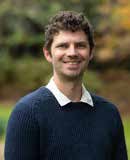
Dr James Tsatsaronis is a Senior Lecturer in the Department of Biochemistry and Chemistry, La Trobe University.
j.tsatsaronis@latrobe.edu.au

Dr Katrina Binger is a Senior Lecturer in the Department of Biochemistry and Chemistry, La Trobe University.
k.binger@latrobe.edu.au

Dr Julian Pakay is a Senior Lecturer in the Department of Biochemistry and Chemistry, La Trobe University.
j.pakay@latrobe.edu.au

Dr Lakshmi Wijeyewickrema is a Senior Lecturer in the Department of Biochemistry and Chemistry, La Trobe University.
l.wijeyewickrema@latrobe.edu.au

Dr Fiona Durand is a Lecturer in the Department of Biochemistry and Chemistry, La Trobe University.
f.durand@latrobe.edu.au

Dr Fiona Carroll is a Lecturer in the Department of Biochemistry and Chemistry, La Trobe University.
f.carroll@latrobe.edu.au
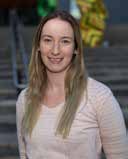
Dr Noni Frankenberg is an Academic Coordinator for the PSB Partnership in the Department of Biochemistry and Chemistry, La Trobe University.
n.frankenberg@latrobe.edu.au
This article first appeared in the ASBMB Education Feature of Australian Biochemist Vol 54 No 1, April 2023, pages 13–15.
ASBMB Membership Office
T +61 (03) 9907 8648
E asbmb@wsm.com.au
© 2026 ASBMB. All rights reserved.