Silver Linings of Rapidly Transformed Biochemistry Laboratory Teaching During the COVID-19 Pandemic
Joanne Castelli, Sean Ramsey, Alyssa Van Dreumel and Peter Arthur
School of Molecular Sciences, University of Western Australia
Laboratory teaching for undergraduate biochemistry students at the University of Western Australia (UWA) has traditionally followed a well-established Prepare–Do–Review model (1).
This flipped learning approach organises laboratory training into modules focused on specific experimental techniques, allowing students to develop both theoretical understanding and practical skills.
The model encourages students to prepare before entering the laboratory, concentrate on experimental work during practical sessions and consolidate their learning afterwards.
The Prepare–Do–Review Model
The existing laboratory program consists of three connected stages.
Prepare: Before attending laboratory classes, students complete online preparatory activities through the university's learning management system (LMS).
These activities include watching videos, reviewing PowerPoint presentations, completing assigned readings and undertaking formative and summative quizzes.
This preparation introduces the scientific background and laboratory procedures, enabling students to arrive with an understanding of the techniques they will use.
Do: Students then attend practical laboratory sessions where they apply their knowledge through hands-on experimentation.
Because the theoretical preparation has already been completed, laboratory time can be devoted to developing technical skills, troubleshooting experiments and solving problems.
Review: During the following week, students consolidate their understanding through post-laboratory activities.
These include preparing oral presentations and completing an in-class quiz to assess their understanding of the practical work.
Although the Prepare–Do–Review model had proved successful, the teaching team recognised opportunities to further improve laboratory learning.
A Community of Practice was therefore established to bring together expertise from across UWA and explore new approaches to laboratory teaching.
However, the emergence of the COVID-19 pandemic in 2020 required an immediate change in priorities.
Rapid Transition to Online Laboratory Teaching
At the beginning of 2020, the teaching team had commenced delivery of BIOC2001 Biochemistry and Molecular Biology of the Cell to 102 second-year students.
Students were already familiar with asynchronous online preparation, as this formed part of the established flipped learning model.
However, the sudden move to emergency remote teaching meant that both the practical laboratory sessions and the subsequent review activities had to be redesigned for online delivery.
To recreate elements of the laboratory experience, the teaching team filmed experimental procedures using a GoPro camera.
The recordings were edited into short videos of approximately five minutes, allowing students to observe the procedures and techniques that would normally be demonstrated in person.
These videos formed the basis of interactive online laboratory sessions delivered synchronously through Zoom.
Each session accommodated up to 50 students and was recorded so students could revisit the material.
Rather than simply providing videos for independent viewing, the teaching team incorporated active learning activities designed to encourage participation and discussion.
Interactive Online Laboratory Sessions
During the synchronous Zoom sessions, students initially watched a laboratory video while discussing the theoretical principles and experimental techniques involved.
Zoom Polls were used to ask formative questions and check students' understanding of the concepts being presented.
The video was then played again, with the demonstrator pausing at appropriate points to explain procedures, clarify difficult concepts and respond to questions.
Students could ask questions through the Zoom Chat function, providing another way to participate during the session.
Preset questions relating to the laboratory activities were also completed and discussed collaboratively.
Students could contribute to these discussions using their microphones, cameras or the chat function, allowing different forms of participation.
These activities helped maintain an interactive learning environment despite the absence of physical laboratory access.
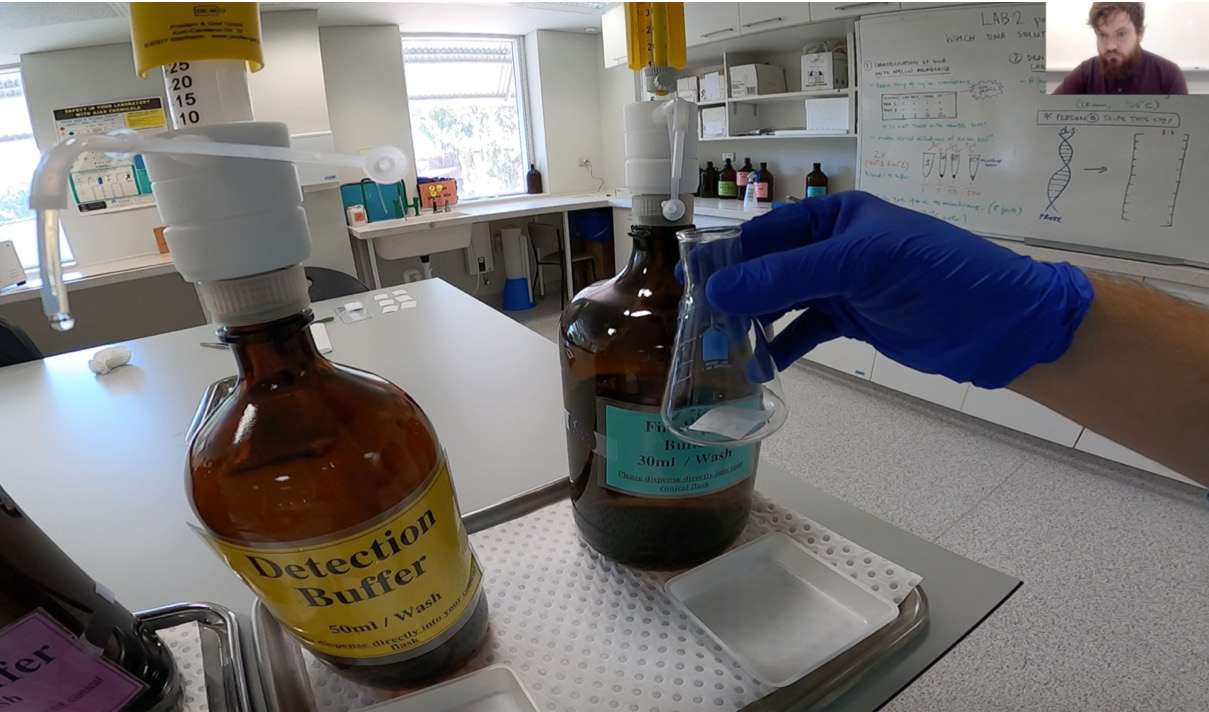
Fig. 1. Demonstrator Sean Ramsey presents the laboratory to students via an interactive Zoom session.
Adapting Post-laboratory Learning and Assessment
The post-laboratory review sessions were also adapted for synchronous online delivery through Zoom.
During these sessions, students delivered individual five-minute PowerPoint presentations.
Each student completed one presentation during the semester, allowing them to demonstrate their understanding and communicate scientific concepts to their peers.
The presentations were recorded, creating a valuable resource for future assessment moderation and training new markers.
At the conclusion of each module, students completed a summative asynchronous quiz through the LMS.
Together, these activities retained important aspects of the original review process while accommodating the restrictions associated with remote teaching.
Challenges of Remote Laboratory Teaching
The transition to online delivery presented several challenges, particularly those associated with differences in students' access to technology and reliable internet connections.
These circumstances were largely outside the teaching team's control, but they had to be considered when designing learning activities.
To support equitable access, alternative learning arrangements and recordings were made available to students who could not participate fully in synchronous sessions.
Although the online activities provided valuable opportunities for engagement, they could not fully replicate the educational benefits of physical laboratory work.
The experience reinforced the importance of hands-on laboratory training in biochemistry education.
Practical laboratory sessions enable students to develop teamwork, problem-solving, manual manipulation and precision skills that are difficult to teach effectively through online activities alone.
The teaching team therefore continued to strongly advocate for practical laboratory experiences as an essential component of undergraduate biochemistry training.
The Silver Linings
Despite the challenges, the rapid transformation of laboratory teaching produced several positive outcomes.
Students developed additional digital skills by adapting to new learning technologies and discovering different ways to communicate and share scientific knowledge.
Teaching staff also gained valuable experience in preparing digital learning materials, designing interactive questions and delivering classes through unfamiliar platforms.
The transition required educators to explore both synchronous and asynchronous teaching strategies, expanding the range of approaches available for future learning activities.
A particularly valuable outcome was the creation of an extensive collection of teaching resources.
These resources included:
- Short videos demonstrating laboratory techniques and procedures.
- Formative poll questions designed to check student understanding.
- Online quiz questions for assessing laboratory knowledge.
- Student and laboratory demonstrator feedback.
- Recorded student presentations that can support assessment moderation and marker training.
These resources can be incorporated into future face-to-face laboratory teaching, providing additional support for both students and educators.
The experience also encouraged the teaching team to reflect critically on existing practices and consider how the newly developed resources could enhance the established Prepare–Do–Review model.
Looking Ahead
Although emergency remote teaching could not replace the benefits of hands-on experimentation, it provided an opportunity to develop new teaching capabilities and resources.
The lessons learned from this experience will inform future changes to laboratory teaching at the University of Western Australia.
By combining the strengths of practical laboratory learning with newly developed digital resources and active learning strategies, the teaching team aims to create an improved learning experience for both students and educators.
Reference
- Arthur P, Ludwig JM, Castelli J, Kirkwood P, Attwood P (2016). Biochemistry and Molecular Biology Education 44(3):276–287.
About the Authors
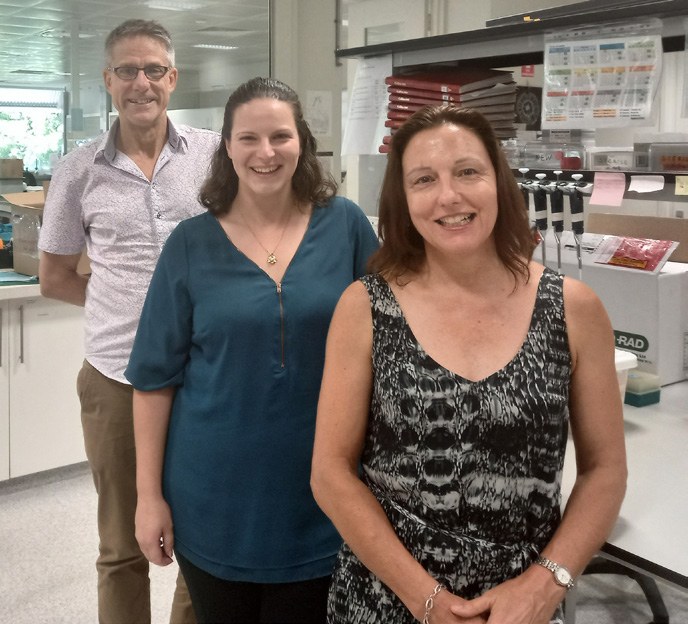
From left: Peter Arthur, Alyssa Van Dreumel and Joanne Castelli.
Dr Joanne Castelli is a Learning Designer in the Educational Enhancement Unit at the University of Western Australia.
joanne.castelli@uwa.edu.au
Sean Ramsey is a Laboratory Demonstrator in the School of Molecular Sciences at the University of Western Australia.
sean.ramsey@uwa.edu.au
Dr Alyssa Van Dreumel is a Teaching Academic in the School of Molecular Sciences at the University of Western Australia.
alyssa.vandreumel@uwa.edu.au
Dr Peter Arthur is a Teaching and Research Academic in the School of Molecular Sciences at the University of Western Australia.
peter.arthur@uwa.edu.au
This article first appeared in the ASBMB Education Feature of Australian Biochemist , Vol 52 No 1, April 2021, pages 22–23.
ASBMB Membership Office
T +61 (03) 9907 8648
E asbmb@wsm.com.au
© 2026 ASBMB. All rights reserved.