Skill Development in the Online Laboratory Class
Jessica Gibbons
Biomedical Discovery Institute, Monash University
One of the greatest challenges for university educators during 2020 was the rapid conversion of face-to-face laboratory classes into online learning experiences.
Although students could no longer access physical laboratories to develop hands-on technical skills, the transition provided an opportunity to focus on other essential scientific capabilities.
In particular, we identified three areas that could be developed effectively through online laboratory activities:
- Scientific communication
- Experimental design
- Data analysis and interpretation
These skills are fundamental to scientific investigation and can be developed through structured learning activities even when students are unable to perform laboratory experiments themselves.
Our Approach
To replace ten weeks of wet laboratory classes in a first-year molecular biology unit within the Bachelor of Biomedical Science at Monash University, we developed a program comprising ten online laboratory sessions.
The program was divided into two five-week phases, each designed to support different aspects of students' scientific development.
Phase 1: Understanding Laboratory Techniques
During the first five weeks, students were introduced to individual molecular biology laboratory techniques, including:
- Polymerase chain reaction (PCR)
- Laboratory assays
- Molecular cloning
Rather than concentrating solely on how these techniques are performed, the activities encouraged students to understand their underlying principles and how experimental results are generated.
Students also developed their skills in analysing and interpreting experimental data.
An important component involved examining imperfect results and unsuccessful experiments.
By exploring why experiments might fail and considering possible solutions, students gained experience in scientific troubleshooting and critical thinking.
Phase 2: Project-based Scientific Investigation
During the second five weeks, the laboratory program shifted to a connected, project-style investigation.
The project centred on the pGLO plasmid and the controlled expression of green fluorescent protein (GFP), drawing on an educational approach described by Girón and Salto (1).
Students applied the techniques introduced during the first phase to plan a sequence of experiments investigating the effects of mutations on GFP.
This included considering mutations that alter the protein's fluorescence from green to blue.
Students were required to develop hypotheses, design experimental investigations, analyse supplied data and draw conclusions from their findings.
This approach allowed students to experience the progression of a scientific research project rather than completing a series of unrelated laboratory exercises.
Weekly Online Laboratory Format
Each online laboratory replaced a traditional three-hour face-to-face practical session.
The weekly learning activities were organised into four connected components, as illustrated in Figure 1.
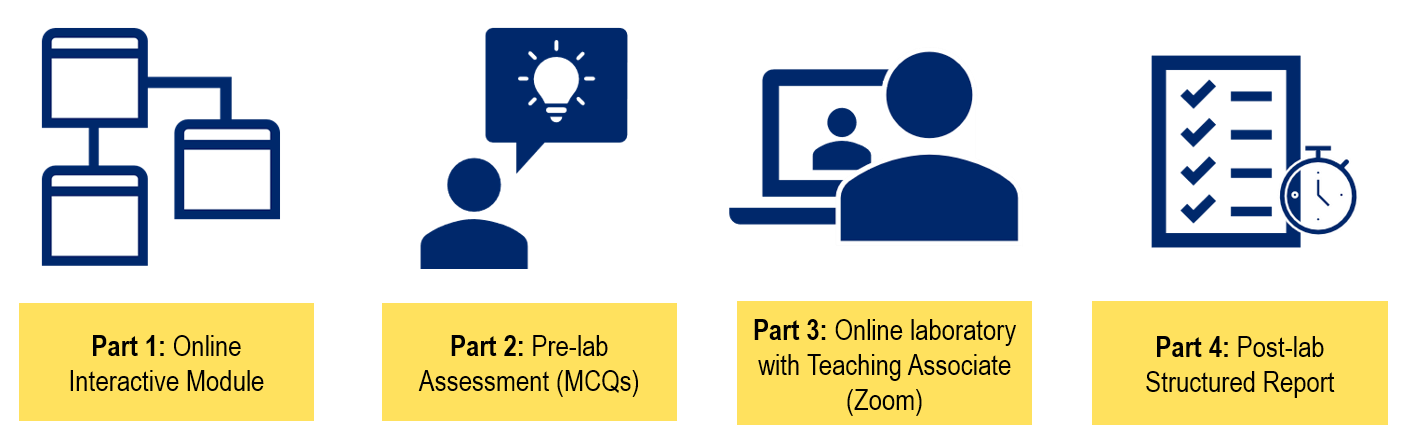
Fig. 1. The components of the weekly online laboratory sessions.
Part 1: Online Interactive Module
Students began each week by completing an interactive online module introducing the experiment and relevant scientific concepts.
The modules incorporated a variety of activities, including interactive videos, questions requiring students to consider experimental outcomes and exercises involving data analysis.
These resources provided the foundation for the subsequent online laboratory session.
Part 2: Pre-laboratory Assessment
Before attending the synchronous online laboratory, students completed a short multiple-choice quiz.
The quiz encouraged students to work through the interactive module and check their understanding of the preparatory material.
Part 3: Online Laboratory with Teaching Associate
Students then participated in a Zoom laboratory session facilitated by a teaching associate.
These sessions provided opportunities to discuss the experimental activities, clarify scientific concepts and consolidate learning from the online modules.
Part 4: Post-laboratory Structured Report
The final component was a structured laboratory report.
This assessment provided students with an opportunity to organise their scientific findings and practise communicating experimental results.
Together, the four components created a structured learning sequence that combined independent preparation, assessment, interaction with educators and scientific reporting.
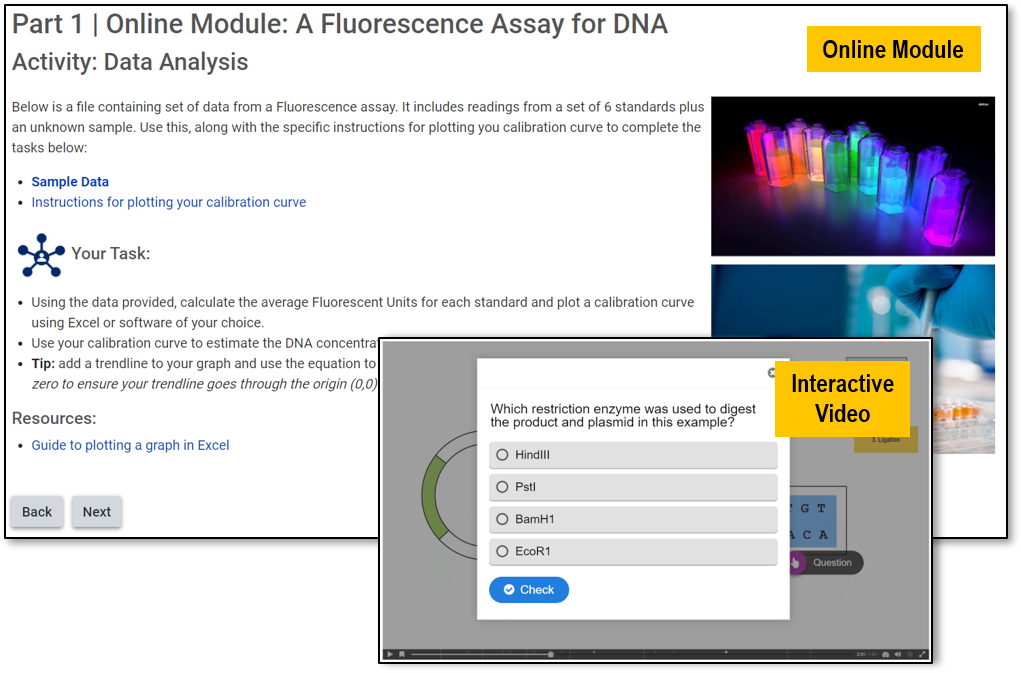
Fig. 2. The weekly online modules included activities for students to complete before attending Zoom sessions with teaching associates, including interactive videos, questions and data analysis exercises.
Impact and Conclusions
Feedback collected through the end-of-semester unit evaluation was overwhelmingly positive towards the online laboratory program.
Students reported that the interactive online modules were effective in preparing them for the synchronous laboratory sessions.
They also considered the Zoom sessions valuable for consolidating their understanding of the scientific concepts and experimental techniques.
Student feedback indicated that the structured reporting assessments were effective in developing scientific communication skills.
Several recurring themes emerged from the student evaluations.
Greater engagement and understanding: Students appreciated the interactive nature of the laboratories and felt that investigating a particular topic each week helped them develop a deeper understanding than passive learning alone.
Practical application of molecular biology: Students valued the opportunity to explore how molecular biology concepts are applied in scientific investigations and to develop skills such as preparing scientific reports.
Continuity through project-based learning: Students particularly enjoyed the connected pGLO plasmid investigation during the later weeks, which allowed them to explore related experiments in greater depth.
Although students were unable to conduct the experiments themselves, they gained experience in the planning, analysis and interpretation stages of scientific research.
The online format also introduced students to experimental techniques that may not always be practical to include in an undergraduate teaching laboratory.
The experience demonstrated that online laboratory teaching can provide meaningful opportunities to develop important scientific capabilities, even when hands-on laboratory work is not possible.
By emphasising experimental design, data analysis and scientific communication, the program enabled students to engage with the process of scientific investigation in a structured and purposeful way.
Reference
- Girón MD, Salto R (2011). Biochemistry and Molecular Biology Education 39:309–315.
About the Author

Dr Jessica Gibbons is a Lecturer in Biomedical Sciences Teaching at Monash University.
jessica.gibbons@monash.edu
This article first appeared in the ASBMB Education Feature of Australian Biochemist , Vol 52 No 1, April 2021, pages 23–24.
ASBMB Membership Office
T +61 (03) 9907 8648
E asbmb@wsm.com.au
© 2026 ASBMB. All rights reserved.