Trafficking the Interdisciplinary Mindset Beyond the Intracurricular Space
Saw Hoon Lim, Jiangli Tan and Ger Post
University of Melbourne
In 2021, the University of Melbourne introduced a new university-wide Breadth subject titled Designer Humans: Prospects and Perils. The subject was developed to encourage students to examine emerging biomedical technologies and consider their wider implications for individuals and society.
At the centre of the subject was a challenging question: how should we critically evaluate biomedical innovations in relation to their effects on human life, culture and society?
Addressing such questions requires more than scientific knowledge alone. Students need to consider perspectives from the sciences, social sciences and humanities to understand the complex ethical, cultural and societal consequences of biomedical developments.
The subject was therefore designed to bring together students from different disciplinary backgrounds and encourage them to engage with unfamiliar concepts, approaches and viewpoints.
Initially, this interdisciplinary environment could feel challenging. Students were required to move beyond the perspectives of their own disciplines and consider ideas that were sometimes very different from those they had previously encountered.
As the semester progressed, however, students became increasingly comfortable integrating different forms of knowledge and applying them to biomedical technologies that interested them.
This development was particularly evident in tutorial discussions, where students exchanged ideas across disciplinary boundaries, and in assessment tasks requiring critical evaluation of complex issues.
The teaching team also benefited from the experience. Academics from different disciplines discovered new concepts and perspectives through their interactions with colleagues and students.
The enthusiasm for interdisciplinary discussion occasionally became so strong that students encouraged lecturers to spend less time questioning one another and provide more opportunities for student participation.
The success of this teaching approach inspired us to consider how the interdisciplinary mindset could be extended beyond the formal curriculum and shared with a wider audience.
Humans 2.0: Extending Interdisciplinary Learning Beyond the Classroom
With support from a University of Melbourne Learning and Teaching Initiatives grant, we established a student-led interdisciplinary journal called Humans 2.0.
The journal provided a platform for students to publish essays, personal reflections and creative artworks exploring the future of humanity and the influence of emerging technologies.
It encouraged students to communicate their ideas beyond traditional assessment tasks and contribute to broader conversations about the scientific, social and ethical dimensions of biomedical innovation.
The journal also became the foundation for the Humans 2.0 conference, which was organised collaboratively by students and academic staff.
Held on 1 July 2022, the conference sought to engage both the university community and members of the wider public in interdisciplinary discussions about complex scientific and societal questions.
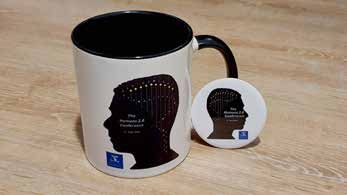
The Humans 2.0 conference was held on 1 July 2022 to promote the interdisciplinary student-led journal. Pictured are the Humans 2.0 designed souvenirs for speakers (mugs) and attendees (badges).
The conference program featured speakers whose professional and research activities connected different disciplines, alongside students who shared their ideas and aspirations concerning future biomedical technologies.
Rather than presenting a conventional sequence of independent talks, the organisers developed an interactive storyline that connected the conference presentations and encouraged audience participation.
Exploring Biomedical Ethics Through an Interactive Story
The conference narrative followed a family whose young child was discovered to carry the gene associated with early-onset Huntington's disease, a rare autosomal dominant inherited disorder.
The family faced difficult decisions involving emerging biomedical technologies, their potential benefits and limitations, and the ethical questions associated with intervening in human biology.
As the story developed, participants were invited to consider how advances in medical science might influence family relationships, individual choices and society's understanding of what it means to be human.
Presentations and panel discussions were carefully positioned throughout the narrative, providing perspectives from art, science and ethics at moments when the fictional family encountered significant decisions.
Audience members were encouraged to engage directly with the scenario by asking questions, interacting with speakers and voting on decisions as though they were members of the family.
This approach created an active learning environment in which participants were not simply receiving information but applying interdisciplinary perspectives to an unfolding ethical dilemma.
The audience therefore played an important role in shaping the conference experience alongside the invited speakers and panellists.
Feedback highlighted the effectiveness of combining scientific and artistic perspectives within a case-study narrative. Participants appreciated the opportunities to reflect on the issues and interact with the information as the story progressed.
The storyline also maintained a high level of audience interest throughout the event. Participants were eager to return after breaks, continue exploring the ethical questions and discover how the family's situation would ultimately unfold.
By combining student contributions, expert presentations, creative storytelling and audience decision-making, the conference demonstrated how interdisciplinary learning can extend beyond the classroom.
The Humans 2.0 initiative illustrates the potential for educational activities to encourage broader public engagement with biomedical innovation while helping students communicate complex ideas to audiences with diverse backgrounds.
Ultimately, both the journal and conference provided opportunities to apply an interdisciplinary mindset to real-world questions about the future of humanity, the responsible use of emerging technologies and the relationship between science and society.
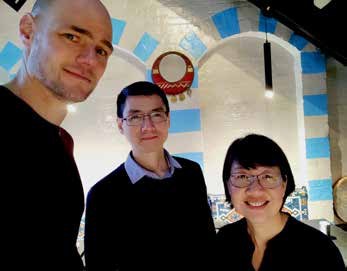
From left: Ger Post, Jiangli Tan and Saw Hoon Lim.
About the authors
Dr Saw Hoon Lim is a Senior Lecturer in the Department of Biochemistry and Pharmacology, University of Melbourne.
sawhoon.lim@unimelb.edu.au
Dr Jiangli Tan is a Teaching Specialist in the Department of Medical Education, University of Melbourne.
tanjl@unimelb.edu.au
Ger Post is an Online Teaching Delivery Tutor in the Department of Anatomy and Physiology, University of Melbourne.
ger.post@unimelb.edu.au
This article first appeared in the ASBMB Education Feature of Australian Biochemist Vol 53 No 3, December 2022, pages 25–26.
ASBMB Membership Office
T +61 (03) 9907 8648
E asbmb@wsm.com.au
© 2026 ASBMB. All rights reserved.