Tutorial Presentation Redesign to Improve Engagement and Development of Core Skills
Jody Gorman
School of Chemistry and Molecular Bioscience, University of Wollongong
The ability to communicate scientific information effectively is an essential skill for graduates pursuing a wide range of careers. Teamwork is equally important, with employers across many industries valuing graduates who can collaborate, contribute ideas and work productively with others.
In a second-year introductory genetics subject at the University of Wollongong, enrolling approximately 250 students, group presentations of research papers had traditionally been used to develop these skills.
Students attended weekly tutorials with approximately half of the cohort and were assigned a particular week in which to present a contemporary research paper as a group.
The presentations were intended to complement lecture content by introducing students to examples of current genetics research and providing opportunities to practise scientific communication.
However, the traditional approach presented an important challenge: while the presenting students participated actively, engagement among the wider tutorial audience was generally limited.
Even the introduction of bonus marks for students who asked questions did little to encourage meaningful participation.
To address this problem, the tutorial assessment was redesigned to encourage active learning, critical thinking and discussion while continuing to develop students' presentation and teamwork skills.
Redesigning the Tutorial Presentation Task
The redesigned assessment replaced the previous sequence of weekly presentations with a more concentrated learning experience involving a nominated small-group tutorial.
Rather than simply presenting a published research paper, students were required to undertake several interconnected activities that contributed to their overall assessment mark.
These activities included preparing and recording a group presentation, evaluating presentations produced by other groups, completing group and self-assessments, and participating in a structured tutorial discussion.
Students prepared their recorded presentations using PowerPoint or another suitable platform and uploaded their work to the Workshop tool in Moodle.
Within this tool, they also completed peer reviews of presentations submitted by other groups, using an assessment rubric to evaluate the quality of the work.
Peer review encouraged students to identify the strengths and weaknesses of different presentations, reflect on effective scientific communication and learn from the approaches taken by their classmates.
To strengthen accountability within groups, students completed both group and individual assessments using Moodle's Team Evaluation tool.
The final component involved participation in a small-group tutorial, where each student was required to ask and answer questions about the research and technologies presented.
This structure encouraged students to prepare for discussion, engage with the work of other groups and contribute actively to conversations that could develop into debates about scientific applications and their implications.
All components contributed to the assessment result, and the overall weighting of the task was increased to reflect the additional work and skills involved.
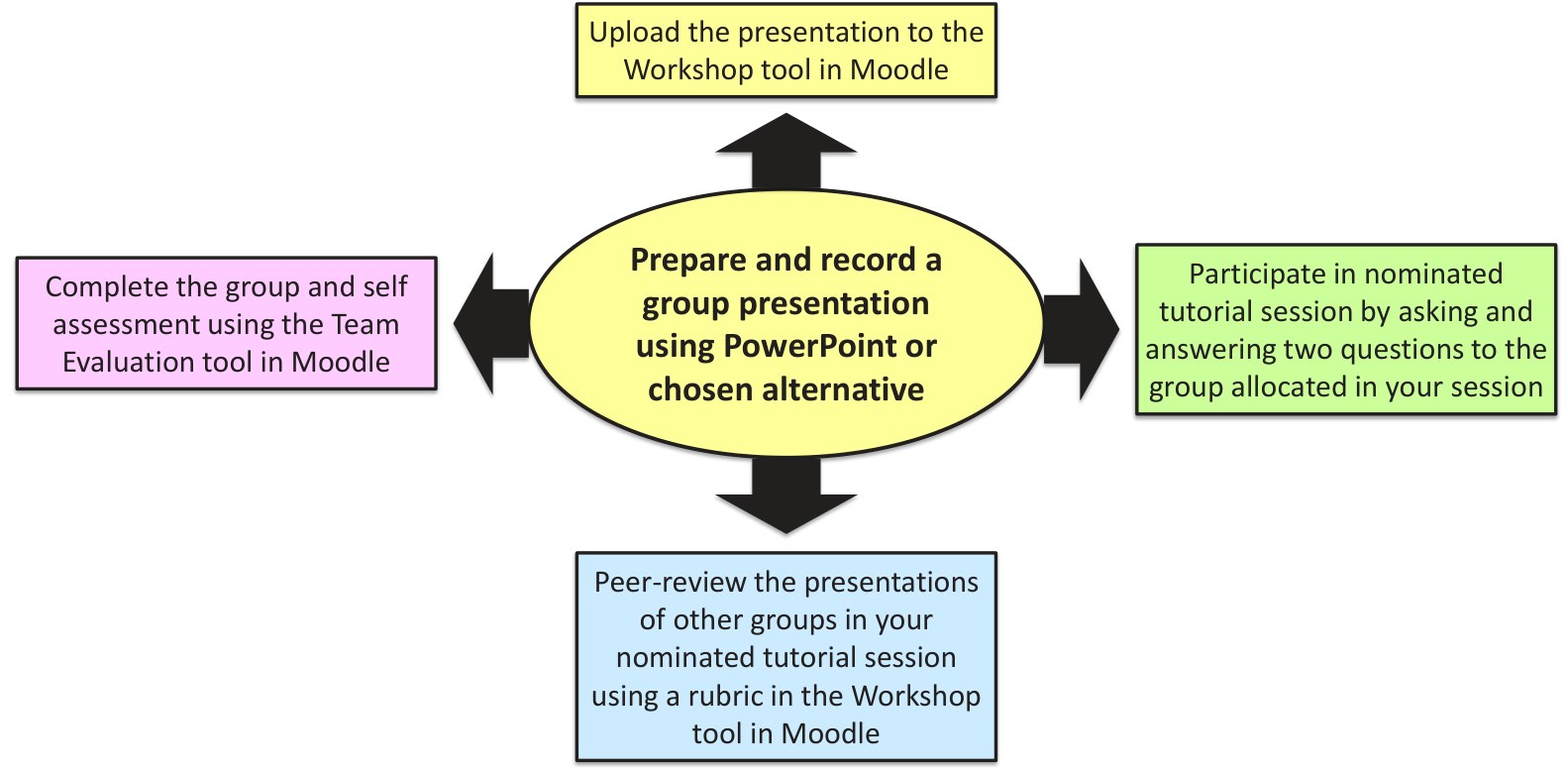
Fig. 1. The redesigned tutorial task is more than just a group presentation, with each component contributing to the overall assessment.
Encouraging Critical Thinking Through Research Topics
The structure of the group presentations was also changed to encourage students to investigate genetic technologies more broadly rather than simply summarising a published research paper.
Student groups were still required to identify a current research article as the basis of their presentation, but their topic had to fall within one of four designated areas.
The four topic areas were:
- Gene editing to fight disease.
- Agricultural biotechnology.
- Commercial human genome sequencing.
- Human cloning for stem cell therapeutics.
In the previous format, presentations had generally followed the conventional structure of a scientific research paper, covering the introduction, methods, results and discussion.
Under the redesigned assessment, students were instead required to organise their presentations around four sections:
- Background and motivation.
- An outline of the genetic technology.
- Other applications of the focus technology.
- Safety and ethical concerns associated with the technology.
This approach required students to investigate information beyond the research paper they had selected.
By researching additional applications, students developed a broader understanding of the technology and its potential uses.
Considering safety and ethical issues also encouraged students to examine possible consequences for human health, society and moral decision-making.
The resulting discussions exposed students to contemporary research and technologies within four important and sometimes controversial areas of genetics.
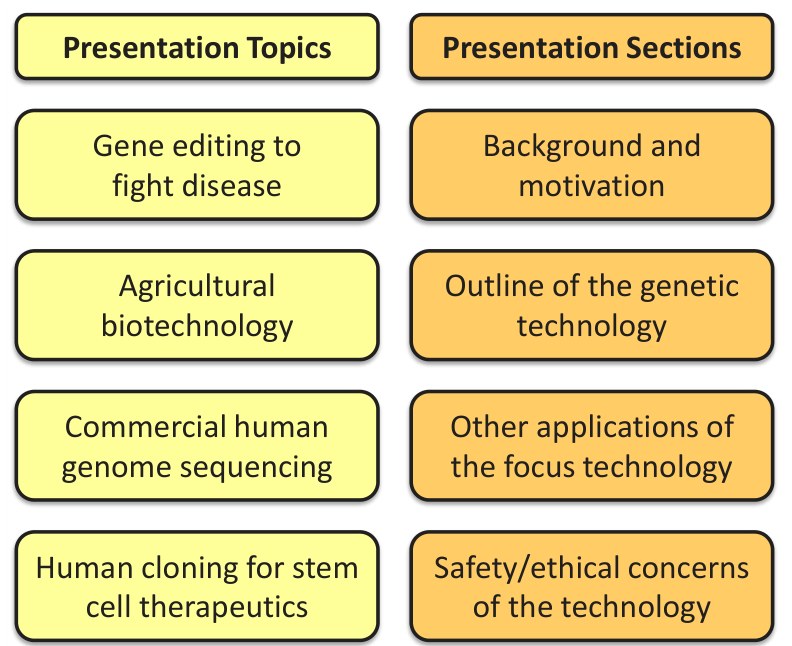
Fig. 2. Presentations were focused on four sections that required students to research beyond the scope of their chosen research paper.
Student Engagement and Feedback
Feedback from tutors facilitating the redesigned tutorials was very positive.
One tutor who had previously managed and assessed presentations under the traditional format observed that the new approach gave students greater responsibility for directing their own learning.
Students frequently led discussions independently, requiring relatively little intervention from teaching staff.
Tutors also observed that most students were actively engaged, demonstrated a sound understanding of the research being discussed and were capable of considering broader questions about the technologies.
Informal conversations with students suggested that the redesigned assessment was generally well received.
Feedback collected through the subject survey supported these observations.
Students particularly valued the opportunity to learn through evaluating other groups' work and participating in discussion.
The smaller tutorial groups were also viewed positively because they made it easier to engage with the subject content and contribute to conversations.
Students additionally appreciated that the assessment recognised the effort involved in preparing, reviewing and discussing research rather than relying solely on the final presentation.
Although the redesigned approach required considerable administrative coordination, particularly for a subject enrolling more than 200 students, its benefits were evident.
The return to on-campus teaching following COVID-19 restrictions added further logistical challenges, but the new tutorial structure remained workable.
Overall, the redesigned assessment appeared to achieve its principal aims of improving engagement, encouraging critical thinking and supporting the development of core graduate skills.
The approach was therefore intended to remain a regular component of the Introductory Genetics subject at the University of Wollongong.
About the author

Dr Jody Gorman is a teaching-intensive lecturer in the School of Chemistry and Molecular Bioscience at the University of Wollongong.
jwilton@uow.edu.au
This article first appeared in the ASBMB Education Feature of Australian Biochemist Vol 53 No 2, August 2022, pages 14–15.
ASBMB Membership Office
T +61 (03) 9907 8648
E asbmb@wsm.com.au
© 2026 ASBMB. All rights reserved.