Using an Assessment Literacy Module to Improve Scientific Report Writing
Amber Willems-Jones
University of Melbourne
In 2020, researchers at the Melbourne School of Psychological Sciences developed an Assessment Literacy Module (ALM) to address differences between how students and academics interpret assessment instructions and marking criteria (1). Such differences can result in students receiving grades below their expectations despite believing they have followed the assessment requirements.
Since 2021, the ALM has been introduced into numerous subjects at the University of Melbourne, including the second-year laboratory-based subject Techniques in Molecular Science. Research indicates that the module supports students in developing evaluative judgement skills (2).
At ASBMB 2023 in Canberra, I presented the benefits of the ALM and encouraged educators across disciplines to consider similar approaches to improving students' assessment literacy.
The ALM is an interactive, sequential online module incorporated into the subject's learning management system, Canvas. It allows students to act as assessors by reviewing sample assignments against the marking rubric and providing written explanations for their grading decisions (Fig. 1).
Students receive immediate feedback comparing their assessment with that of an expert marker. Additional explanations help students understand why particular grades were awarded and improve their interpretation of the marking criteria. This process supports the development of evaluative judgement (3).
Previous evaluation found that 89% of students reported a better understanding of assessment criteria, while the same proportion considered the module useful for preparing subsequent assessments (2).
Notably, only 47% reported consulting assignment rubrics before using the ALM. Among staff, 69% believed the module improved students' understanding of marking criteria and their confidence in completing assessments (2).
In Techniques in Molecular Science, students who completed at least one sample evaluation through the ALM achieved higher average grades in subsequent scientific reports than students who did not use the module.
Across three written reports, the difference was approximately 4–7 percentage points. Greater familiarity with marking rubrics and opportunities for self-assessment may contribute to this improvement, consistent with research on rubrics and reflective assessment practices (3–5).
Students also described how the ALM encouraged them to evaluate academic writing from the perspective of a marker and apply the same critical approach to their own reports.

Fig. 1. Activities completed by the student within the Assessment Literacy Module. Icons created by Freepik, Flaticon.
There are, however, limitations to interpreting these findings. Completion statistics do not necessarily establish whether students meaningfully engaged with the module. Some participants may have progressed through the activities without carefully considering the marking rubric or providing thoughtful justifications.
Further examination of students' written responses would help determine whether their evaluations demonstrate genuine reflection and understanding.
Another limitation is that participation was voluntary. Students choosing to complete the ALM may already have been more motivated or academically successful, meaning the higher grades cannot necessarily be attributed to the module itself.
Nevertheless, student feedback suggests that meaningful engagement with the ALM can encourage reflection on the qualities of effective scientific writing, including relevance, clarity, conciseness and appropriate structure.
Students also indicated that the experience would influence their future assessment practices, including allocating more time for editing, consulting marking rubrics more closely and critically reviewing their work before submission.
Table 1. Comparison of average written scientific report grades (%) in Techniques in Molecular Science for students who did and did not use the ALM prior to completing associated written assessment items. Data from 2023, Semester 1 and Semester 2, N=238.
| ALM completion^ | N | Report 1 | p* | Report 2 | p* | Report 3 | p* |
|---|---|---|---|---|---|---|---|
| Students who did not use the ALM to evaluate either sample | 58 | 64.9 | NA | 75.7 | NA | 70.5 | NA |
| Students who only used the ALM to evaluate Sample A (the 'poor' report) | 30 | 70.2 | 0.063 | 79.5 | 0.086 | 77.5 | 0.028 |
| Students who only used the ALM to evaluate Sample B (the 'very good' report) | 18 | 73.0 | 0.018 | 75.7 | 0.499 | 76.3 | 0.088 |
| Students who used the ALM to evaluate both sample reports | 177 | 72.0 | 0.008 | 79.7 | 0.035 | 76.3 | 0.024 |
^Data obtained from metrics in Canvas.
*p value from Student's t-test comparing student report grades in row 1 with those from each other category.
Although further investigation is needed, these findings suggest that an Assessment Literacy Module may help clarify assessment expectations, strengthen students' ability to interpret marking criteria and potentially improve academic outcomes. The approach could be valuable across biochemistry and other disciplines.
References
- Siveges B, Moneer S, Blunden AG, Brooker A, McKague M, Howe PDL. Assessment reform in the Melbourne School of Psychological Sciences, 2019–2020. 2021. University of Melbourne.
- Willems-Jones AJ, Rivera Munoz CA, Frankland S, Saligari MJ, Lim SH, Fox J, McCarty R, Fong A, Howe PDL. Proceedings of the Australian Conference on Science and Mathematics Education 2023;83–90.
- Boud D, Lawson R, Thompson DG. Assess Eval High Educ 2013;38(8):941–956.
- Ragupathi K, Lee A. Beyond fairness and consistency in grading: the role of rubrics in higher education. In: Sanger C, Gleason N (eds). Diversity and Inclusion in Global Higher Education. 2020. Palgrave Macmillan, Singapore.
- Reddy YM, Andrade H. Assess Eval High Educ 2010;35(4):435–448.
About the author
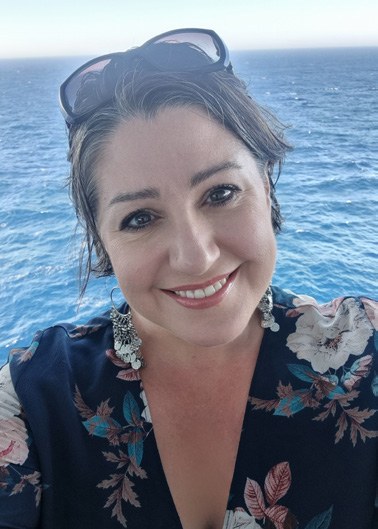
Dr Amber Willems-Jones is a teaching specialist, Senior Lecturer and subject coordinator of Techniques in Molecular Science in the Department of Biochemistry and Pharmacology at the University of Melbourne.
amber.willems@unimelb.edu.au
This article first appeared in the ASBMB Education Feature of Australian Biochemist Vol 55 No 1, April 2024, pages 18–19.
ASBMB Membership Office
T +61 (03) 9907 8648
E asbmb@wsm.com.au
© 2026 ASBMB. All rights reserved.