Using Digital Technologies to Create an Engaging Small Group Learning Experience in Large Cohorts
Michelle Rank
Department of Anatomy and Physiology, University of Melbourne
The transition to emergency remote learning during the COVID-19 pandemic had a significant impact on students' opportunities for social interaction. Many undergraduate students, particularly those beginning their university studies, experienced prolonged periods of isolation and had limited opportunities to establish relationships with their classmates.
For these students, the absence of on-campus learning also meant missing opportunities to participate in the wider university community and develop connections that support their academic and personal development.
Social interaction is an important component of effective learning. Students benefit from opportunities to discuss ideas, share their understanding, receive feedback and learn collaboratively with their peers (1).
One way to encourage these interactions is through structured small-group learning activities that allow students to work together towards shared learning objectives.
In this article, I describe our approach to introducing collaborative small-group learning into a large second-year undergraduate biomedical science core subject at the University of Melbourne.
The initiative involved more than 550 students and used a blended synchronous learning (BSL) approach, allowing students attending campus and those studying remotely to participate in the same learning activities.
By combining Campuswire, Padlet and Zoom, we transformed a conventional large-group lecture into an interactive workshop built around small-group discussion, collaborative problem-solving and peer feedback.
Creating Collaborative Learning Opportunities in Large Classes
The small-group workshops were delivered during timetabled lecture sessions in a large-capacity university theatre.
Students attending campus participated from within the lecture theatre, while students studying remotely joined the live session through Zoom.
Rather than following a conventional lecture format, each session began with a set of four to six Challenge Questions.
These questions were similar to short-answer examination questions and required students to apply and integrate knowledge drawn from different areas of the subject.
The questions were designed to encourage students to connect concepts, explain their reasoning and use their understanding of biomedical science to solve problems.
Students were asked to organise themselves into small groups of up to ten participants.
Each group selected two or three Challenge Questions to investigate and discuss collaboratively. Students were also encouraged to give their teams names, helping establish a sense of group identity.
On-campus students worked together in groups within the lecture theatre.
Remote students formed their own groups using the chatroom functionality available through the subject's Campuswire discussion board.
This arrangement allowed both groups of students to participate in collaborative learning, despite being physically separated.
Students were given approximately 20–25 minutes to discuss their selected questions and develop responses as a team.
Once the discussion period had concluded, each group posted its answers to Padlet, a digital collaborative noticeboard that allows users to contribute content and interact in real time.
Padlet provided a shared online space in which contributions from on-campus and remote groups could be viewed together.
For the remainder of the workshop, students were encouraged to read responses submitted by other groups, discuss alternative approaches and provide comments, feedback and upvotes.
This enabled students to compare different explanations, identify similarities and differences in reasoning, and learn from the approaches taken by their peers.
The combination of group discussion and shared responses transformed the lecture session into a collaborative learning environment in which students actively contributed to the development and evaluation of ideas.
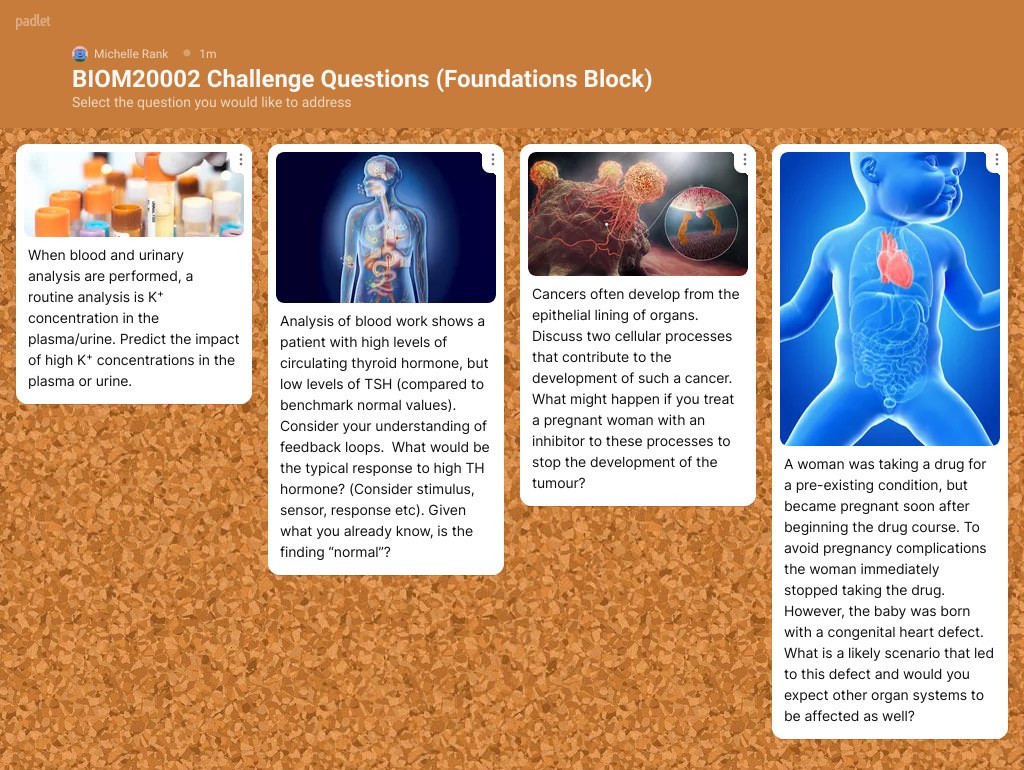
Fig. 1. A sample Padlet wall showing integrated Challenge Questions posed to students during a large-cohort workshop session in a second-year undergraduate core biomedicine subject. Students formed groups of up to ten to discuss and post answers, then reviewed and provided feedback on responses from other groups.
Supporting Flexible Participation and Peer Feedback
An important feature of the workshop design was its flexibility.
Students who were unable to attend a live session, either on campus or remotely, could still access the Padlet wall and contribute at a time that suited them.
These students could submit their own responses to Challenge Questions, comment on contributions from other groups or provide feedback independently.
This asynchronous option ensured that students who could not participate in the live discussion were not excluded from the learning activity.
Following each session, subject coordinators reviewed the Padlet contributions and provided informal feedback directly on the shared noticeboard.
At the beginning of the next timetabled workshop, coordinators also discussed responses to the previous week's Challenge Questions.
This process provided students with further opportunities to reflect on their understanding, clarify misconceptions and consider how their answers could be improved.
Because the Challenge Questions were structured similarly to short-answer examination questions, the activities also provided valuable formative assessment opportunities.
Students could practise applying knowledge, communicating scientific reasoning and evaluating answers in a supportive environment before completing formal assessments.
Student Experiences and Engagement
Student feedback on the collaborative workshops was overwhelmingly positive.
A majority of students who responded to feedback activities agreed that the workshops had improved their learning experience.
Students particularly appreciated the opportunity to revisit material in a different way and reinforce their understanding through discussion.
Working through Challenge Questions collaboratively helped students consolidate their knowledge while learning from the perspectives and explanations of their peers.
The workshops also provided opportunities for students to interact with lecturers and classmates, helping restore some of the social connections that had been disrupted during remote learning.
An unexpected benefit emerged from the use of Campuswire chatrooms.
Although these chatrooms were originally intended to support remote students, some students attending campus also preferred to participate in group discussions online.
Providing this option allowed students to select the mode of participation that best suited their learning preferences.
The workshop design therefore supported student autonomy by offering different ways to engage in the same collaborative learning activities.
Students could participate face-to-face, communicate through digital chatrooms or contribute asynchronously through Padlet.
This flexibility helped create a more inclusive learning environment while maintaining the benefits of group discussion and peer feedback.
Reflections on Teaching and Implementation
From an academic perspective, the workshops were initially challenging to coordinate.
Managing several digital technologies simultaneously, while supporting students in both the lecture theatre and online, required careful organisation and attention.
However, the process became easier with experience, and the practical challenges were gradually overcome as staff became more familiar with the workshop structure.
We found that the sessions worked best when supported by two academics or at least one additional tutor.
This staffing arrangement helped ensure that both on-campus and remote students could communicate with teaching staff and receive assistance when needed.
Dedicated support was particularly valuable for remote students, who benefited from having a tutor available to answer questions and facilitate their online discussions.
Although coordinating the sessions demanded considerable energy, the increased student engagement made the experience rewarding for educators.
Seeing students actively discuss biomedical concepts, work collaboratively and engage with classmates across different learning environments demonstrated the value of the approach.
The workshops showed that meaningful social learning experiences can be created even in very large university cohorts when digital technologies are used to support collaboration rather than simply deliver content.
While the complete approach may not be suitable for every teaching environment, its underlying principles can be adapted to different subjects, class sizes and delivery modes.
Educators may choose to adopt individual components, such as collaborative Challenge Questions, digital noticeboards or structured peer feedback, without necessarily implementing the entire workshop format.
Ultimately, the initiative demonstrates how a blended synchronous learning approach can strengthen social connections, promote active participation and create engaging small-group learning experiences within large undergraduate cohorts.
Reference
- Bandura A (1986). Social Foundations of Thought and Action: A Social Cognitive Theory. Prentice-Hall.
About the author
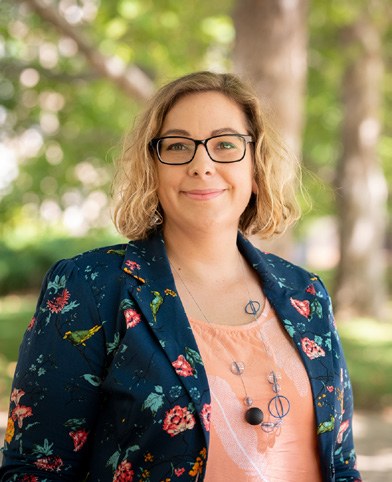
Dr Michelle Rank is a teaching specialist Senior Lecturer in the Department of Anatomy and Physiology at the University of Melbourne.
michelle.rank@unimelb.edu.au
This article first appeared in the ASBMB Education Feature of Australian Biochemist Vol 53 No 2, August 2022, pages 16–17.
ASBMB Membership Office
T +61 (03) 9907 8648
E asbmb@wsm.com.au
© 2026 ASBMB. All rights reserved.