Zooming in on Seven Recommendations for Online Teaching
Emma Gamble, Jessica Gibbons and Nirma Samarawickrema
Monash University
Active learning has become an important component of biochemistry education, with research demonstrating its potential to support student engagement and understanding. The rapid transition to online teaching during the COVID-19 pandemic created opportunities to investigate how these approaches could be adapted to digital learning environments.
In 2018, the second-year undergraduate biochemistry unit Metabolic Basis of Disease at Monash University adopted a flipped learning model involving 216 science students.
Students were required to review learning materials before attending active learning workshops. These workshops provided opportunities to apply their knowledge, discuss scientific concepts and work collaboratively on problems.
In 2020, this teaching approach was adapted for online delivery in response to the COVID-19 pandemic.
The workshops were delivered through Zoom, with breakout rooms allowing students to collaborate on case studies, problem-solving exercises and data analysis activities.
The flipped learning structure continued to incorporate preparation before class, interactive learning during workshops and consolidation activities afterwards.
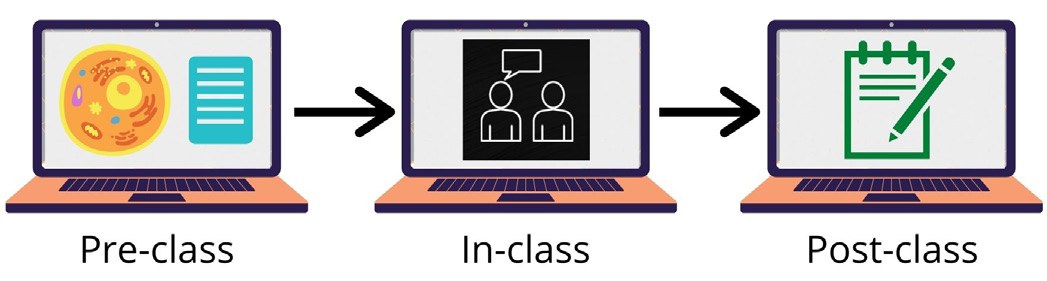
Fig. 1. The workflow of the flipped learning format with an online active learning workshop component.
Evaluating Online Active Learning Workshops
To investigate students' experiences of online active learning, we examined their perceived learning gains over one semester in 2020.
A mixed-methods approach was used, combining a student survey with interviews to provide additional insight into the findings.
The survey was based on the Student Assessment of their Learning Gains (SALG) instrument previously used to evaluate flipped learning in a biochemistry classroom (1).
Students were asked to reflect on the learning benefits they experienced through the online workshops.
Interviews with two students were also conducted to explore their experiences in greater depth and help interpret the survey findings.
The evaluation highlighted several strengths of the online workshops, including approachable educators, useful learning resources and opportunities to check understanding.
However, students also identified difficulties with peer interaction, participation in breakout rooms and connecting workshop activities to everyday life.
These findings informed seven practical recommendations for improving online active learning in biochemistry.
Seven Recommendations for Online Teaching
The recommendations were developed by considering student feedback alongside the challenges and opportunities encountered during online workshops.
Table 1 presents the seven principal findings and their corresponding recommendations for educators.
Table 1. Findings from online active learning workshops and proposed recommendations.
| Finding | Recommendation |
|---|---|
| Students considered educators welcoming and approachable, contributing to a supportive and positive online learning experience. |
1. Create a safe and positive learning environment. Maintain an approachable teaching style and encourage students to feel comfortable participating and asking questions. |
| Students found workshop worksheets and questions useful for supporting their understanding of the material. |
2. Provide digital worksheets. Give students worksheets to complete during workshops and retain afterwards as revision and study resources. |
| Participation in Zoom breakout rooms was limited. Students reported feeling intimidated by the online environment and found changing breakout room groups made interaction more difficult. |
3. Maintain consistent breakout room groups. Keep students in the same breakout room groups throughout the semester to help them develop relationships and become more comfortable contributing. |
| Students experienced limited peer engagement, which reduced their willingness and ability to participate in breakout room activities. |
4. Use icebreakers and monitor breakout rooms. Begin each workshop with an icebreaker in the main Zoom room and encourage educators to visit breakout rooms regularly to support interaction. |
| Questions designed to check understanding of pre-workshop content were considered particularly helpful compared with other learning resources. |
5. Include quizzes to check learning. Use interactive quizzes, such as Kahoot, at the beginning of workshops to review preparatory material and identify gaps in understanding. |
| Some students struggled to recognise how the knowledge gained during workshops could be applied to their everyday lives. |
6. Connect learning to everyday experiences. Make explicit links to familiar topics, such as nutrition and exercise, when designing pre-class activities and connect these examples to workshop tasks. |
| Workshops were more collaborative and positive when students used their cameras. Participation was generally lower when cameras were switched off. |
7. Encourage camera use where possible. Invite students to turn on their cameras when circumstances permit, helping support social interaction and engagement during online learning. |
Applying the Recommendations
The findings suggest that successful online active learning requires more than simply transferring face-to-face teaching activities into a digital environment.
Students benefit from supportive educators, structured activities and opportunities to develop relationships with their peers.
Consistent breakout room groups and icebreaker activities may help overcome some of the social barriers associated with online learning.
Similarly, digital worksheets and interactive quizzes can provide structure and immediate opportunities to evaluate understanding.
Connecting workshop activities to everyday experiences may also help students appreciate the relevance of biochemistry beyond the classroom.
The seven recommendations were scheduled for implementation in the Semester 1 online active learning workshops in 2021.
Following implementation, students' perceived learning gains would be surveyed again to gather additional evidence about the effectiveness of the changes.
Through this iterative approach, the teaching team aimed to continue testing and refining the recommendations to improve learning outcomes in online biochemistry workshops.
Reference
- Ojennus DD (2016). Biochemistry and Molecular Biology Education 44(1):20–27.
About the Authors
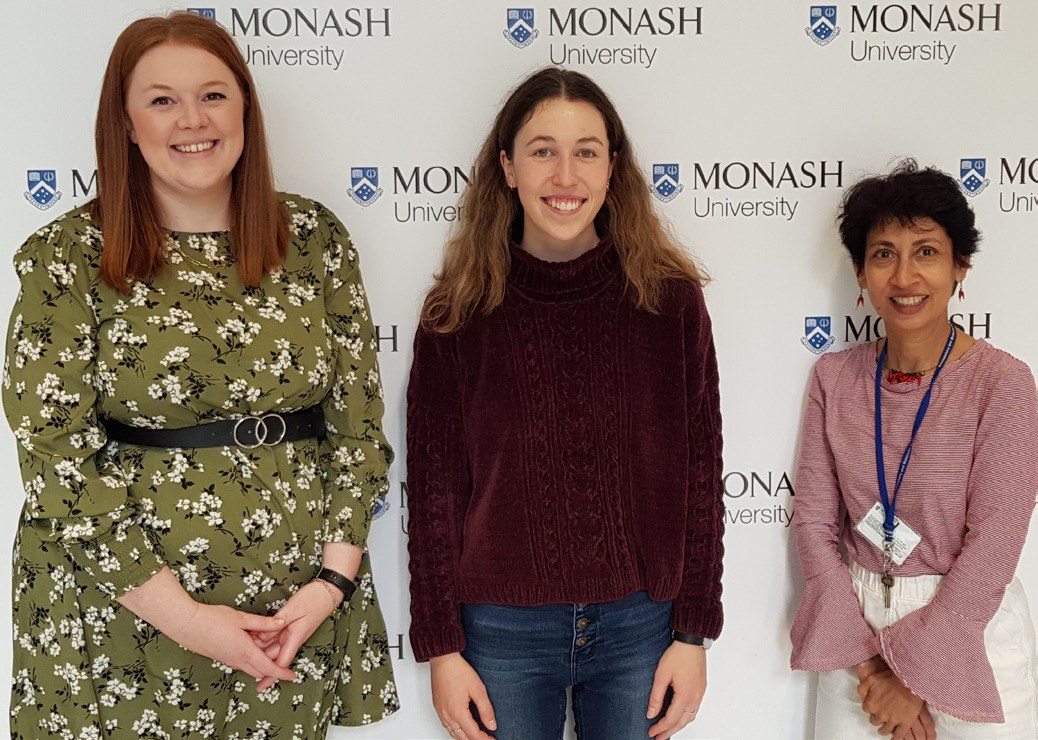
From left: Jessica Gibbons, Emma Gamble and Nirma Samarawickrema.
Emma Gamble is a fourth-year Bachelor of Education (Honours) and Bachelor of Science student at Monash University. This research was completed as part of a student research in action project.
egam0001@student.monash.edu
Dr Jessica Gibbons is a Lecturer in Biomedical Sciences Teaching at Monash University.
jessica.gibbons@monash.edu
Dr Nirma Samarawickrema is a Senior Lecturer in the Department of Biochemistry and Molecular Biology at Monash University.
nirma.samarawickrema@monash.edu
This article first appeared in the ASBMB Education Feature of Australian Biochemist , Vol 52 No 2, August 2021, pages 21–22.
ASBMB Membership Office
T +61 (03) 9907 8648
E asbmb@wsm.com.au
© 2026 ASBMB. All rights reserved.