The Lemberg Medal
The Lemberg Medal is awarded to a distinguished ASBMB member who will present the Lemberg Lecture at the annual ASBMB conference. The Medal is presented in memory of Emeritus Professor M.R. Lemberg who was the Society’s first President and Honorary Member. The award will be made to an individual who has demonstrated excellence in biochemistry and molecular biology and who has made significant contributions to the scientific community. Nominees must have been members of the Society for at least 5 years before the year in which the Medal nomination is to be considered. An honorarium is provided by ASBMB.
To view a list of previous Lemberg medallists please click here.
Nomination Information
- All nominees should have been members of the ASBMB for a minimum of 5 years
- All nominations should include at least 2 proposers who should have been members of the ASBMB for a minimum of 2 years
- Proposers should prepare a nomination document to include all information detailed on the Lemberg Medal Nomination Template. This document should be saved as a single PDF file ready to be uploaded as part of the online nomination form.
When you are ready to begin your nomination, please click the button below.
2026 Award Recipient
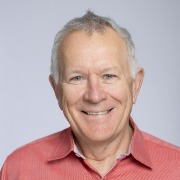
David James
University of Sydney
Professor David E. James is an internationally recognised leader in metabolic biology whose work has transformed understanding of insulin action, nutrient sensing and the molecular basis of metabolic disease. He is an ARC Laureate Fellow and Professor at the Charles Perkins Centre at the University of Sydney, where he leads major multidisciplinary programs investigating the systems biology of cardiometabolic disease.
Professor James’ career has focused on uncovering how cells regulate glucose and lipid metabolism and how these processes fail in insulin resistance and type 2 diabetes. As a postdoctoral researcher, he discovered the insulinresponsive glucose transporter GLUT4, a landmark advance that provided the molecular explanation for insulinstimulated glucose uptake and fundamentally reshaped research in diabetes and endocrinology. His laboratory subsequently identified key components of the GLUT4 trafficking machinery and defined how insulin signalling through Akt coordinates vesicle trafficking and glucose transport.
Over the past two decades, Professor James has pioneered the application of proteomics, phosphoproteomics, and systems genetics to metabolic disease. His group was among the first to map insulin-regulated phosphorylation networks at scale, revealing how signalling pathways integrate nutrient status with cellular metabolism. More recently, his work has expanded to genetically diverse mouse populations and multi-omic approaches to identify causal genes and pathways underlying insulin resistance, fatty liver disease, and healthy ageing. These studies aim to move beyond descriptive association toward mechanistic understanding and therapeutic target discovery.
Professor James has published extensively in leading journals and is one of Australia’s most highly cited biomedical scientists. His contributions have been recognised through election as Fellow of the Australian Academy of Science, many international keynote invitations and major national research fellowships. Beyond his research achievements, he has spearheaded the development of Cell Biology as a major research discipline in Australia as well as playing a central leadership role in building large-scale collaborative infrastructure for metabolic research, including multi-omics platforms, genetically diverse model resources, and translational partnerships spanning academia and industry.
Through a career spanning fundamental discovery to systems-level biology, Professor James’ work has provided foundational insights into how metabolism is regulated in health and disease and continues to shape strategies for preventing and treating cardiometabolic disorders.